HOME | DD
 Bugerman101 — Quilin

Published: 2013-07-26 15:29:15 +0000 UTC; Views: 495; Favourites: 4; Downloads: 4
Redirect to original
Description
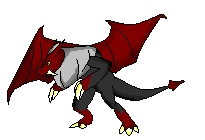
I'm going to do some pieces on Mythical Creatures. Here's number one, the Quilin.Now for a wikiattack.
"The Qilin (Chi-lin; Chinese: 麒麟; pinyin: Qílín; Wade–Giles: Ch'i2-lin2) is a mythical hooved Chinese chimerical creature known throughout various East Asian cultures, and is said to appear with the imminent arrival or passing of a wise sage or an illustrious ruler.[1] It is a good omen that brings rui (Chinese: 瑞; pinyin: Ruì; Wade–Giles: Jui4; roughly translated as "serenity" or "prosperity"). It is often depicted with what looks like fire all over its body. It is sometimes called the "Chinese unicorn" when compared with the Western unicorn.
There are many different ways Qilin have been described. Some think of them as a rare form of unicorn; others have described it as a creature that has the head of a dragon and a body of tiger with scales. Others see it as a creature with a single horn on its forehead, a multicolored back, the hooves of a horse, the body of a deer, and with the tail of an ox.
Although it looks fearsome, the Qilin only punishes the wicked. It can walk on grass yet not trample the blades, and it can also walk on water. As it is a peaceful creature, its diet does not include flesh. It takes great care when it walks never to harm or tread on any living thing, and it is said to appear only in areas ruled by a wise and benevolent leader (some say even if this area is only a house). It is normally gentle but can become fierce if a pure person is threatened by a sinner, spouting flames from its mouth and exercising other fearsome powers that vary from story to story.
The earliest references to the Qilin are in the 5th century BC book Zuo Zhuan.[2][3] The Qilin made appearances in a variety of subsequent Chinese works of history and fiction.
In legend, the Qilin became tiger-like after their disappearance in real life and become a stylised representation of the giraffe in Ming Dynasty.[4][5] The identification of the Qilin with giraffes began after Zheng He's voyage to East Africa (landing, among other places, in modern-day Somalia). The Ming Dynasty bought Giraffes from the Somali merchants along with Zebras, incense and other various exotic animals.[6] Zheng He's fleet brought back two giraffes to Nanjing, and they were referred to as "Qilins".[7] The Emperor proclaimed the giraffes magical creatures, whose capture signalled the greatness of his power.
The identification between the Qilin and the giraffe is supported by some attributes of the Qilin, including its vegetarian and quiet nature. Its reputed ability to "walk on grass without disturbing it" may be related to the giraffe's long, thin legs. Also the Qilin is described as having antlers like a deer and scales like a dragon or fish; since the giraffe has horn-like "ossicones" on its head and a tessellated coat pattern that looks like scales it is easy to draw an analogy between the two creatures. The identification of Qilin with giraffes has had lasting influence; even today, the giraffe is called kirin (기린) by the Koreans and kirin (キリン) by the Japanese."
____________________________________________________________________________________________________________
All from wikipedia