HOME | DD
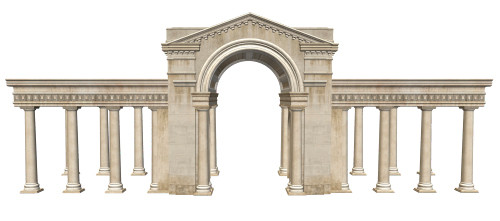
 Herbertrocha — Greek Temple

Published: 2012-09-18 11:50:42 +0000 UTC; Views: 7827; Favourites: 26; Downloads: 205
Redirect to original
Description
Greek temples (Ancient Greek: ὁ ναός, ho naós "dwelling", semantically distinct from Latin templum "temple") were structures built to house deity statues within Greek sanctuaries in Greek paganism. The temples themselves did usually not directly serve a cult purpose, since the sacrifices and rituals dedicated to the respective deity took place outside them. Temples were frequently used to store votive offerings. They are the most important and most widespread building type in Greek architecture. In the Hellenistic kingdoms of Southwest Asia and of North Africa, buildings erected to fulfill the functions of a temple often continued to follow the local traditions. Even where a Greek influence is visible, such structures are not normally considered as Greek temples. This applies, for example, to the Graeco-Parthian and Bactrian temples, or to the Ptolemaic examples, which follow Egyptian tradition. Most Greek temples were oriented astronomically.Most religious buildings today are intended for congregational worship, where groups of people get together on a regular basis to celebrate their god, reaffirm their faith and receive spiritual comfort. Ancient Greek temples were rarely used this way. They were meant to serve as homes for the individual god or goddess who protected and sustained the community. It was the needs of the gods that were most important. They controlled the forces of nature— the sun and rain, which nourished their crops, and the winds that drove their ships. Although generally benevolent, the gods could be quite capricious and were liable to turn against the community— so it was in everyone's interest to make sure that they should feel relaxed and at home. Their houses were the finest, equipped with a staff of servants to look after their every need. They received daily offerings of food and drink along with a proper share of the harvest as well as a share in the profits of any trading or military activity.
The god or goddess was represented by a cult image— usually a seated or standing statue— which occupied the central place in the temple. In the early days they would have been made of wood but, over the years, more permanent and costly materials were preferred— stone or cast bronze. The finest, such as the great statues of Zeus at Olympia or Athena from the Parthenon in Athens (both by the Athenian sculptor Phidias) were of crystelephantine, a combination of gold and ivory. The statue of Zeus was considered one of the Seven Wonders of the ancient world.
Related content







Comments: 1

Ο μεγάλος ναός της Ηερβερτοσ. The great temple of Herbertos.
👍: 0 ⏩: 0