HOME | DD
 orcinuss — ocella

#adoptable #ocella #original_species #semiopenspecies #semi_open_species
Published: 2019-04-01 22:34:54 +0000 UTC; Views: 721; Favourites: 12; Downloads: 0
Redirect to original
Description
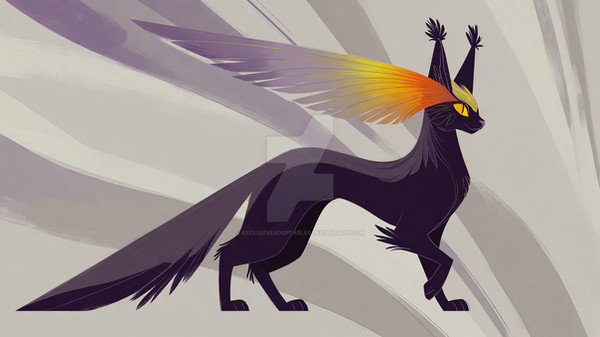
Ocella is a genus of intelligent bipedal critters that live in secluded parts of the world. They wear masks to both hide and protect their... interesting facial architecture. They live in colonies of up to thousands, and are each ruled by a Queen. Ocella adhere to their own social codes strictly, though this code varies from colony to colony. As mentioned, ocella is a genus, not a subspecies! There are many different subspecies with their own adaptations, and come from a common ancestor known as ocella ocella.
The four subspecies are:
- O. vulgaris
- O. silvavagans
- O. ranuncula
- O. pulchellus (coming soon!)
Vulgaris are common ocella. They're fairly small compared to the other species, are bipedal, and one of the most mutable out of the other species. These are most similar to the original common ancestor, Ocella ocella, and are most common in number. Vulgaris are far less shy than their cousins, and mostly live in flat or vegetated areas. They can survive in both extremes in terms of temperature.
Silvavagans or Wanderers are large but elusive ocella. They are quasi-bipedal, being able to use their front legs to forage and use tools. They have a large feathered 'mane' and longer horns. Their language is very different to common ocella, communicating through chirps and chitters mainly. They're fairly immutable, the only mutations being: extra limbs, manelessness and horn & ear adaptations. These are flightless ocella that vastly prefer humid environments.
Ranuncula or Cavelings are small, aggressive ocella, used to the dark and depths of large cave networks. They are mostly quadrapedal and very silent. Other ocella either fear in them or simply don't believe in their existence. They have a very... unique skeleton, designed for worming through narrow cave passages and surprising unsuspecting prey. Ranuncula are mainly carnivores, though do eat some plants so supplement their diet. Not many mutations have been observed on ranunculae, though they present with more void-staining than the other species.
I'll be putting adoptables of these up for auction, and I'll have the lineart available for very, very cheap. :]