HOME | DD
 BlueFlytrap998 — Pulse21

Published: 2016-09-01 03:46:55 +0000 UTC; Views: 688; Favourites: 15; Downloads: 5
Redirect to original
Description
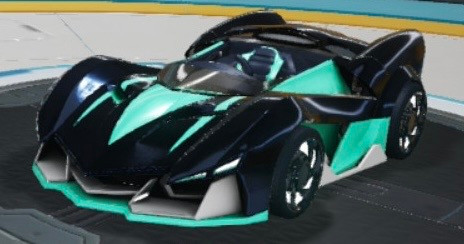
76 Rifle running on iteration 21 of the overwatch to source method.Related content




Comments: 8

Do you plan on making any tutorials for showing how you make and edit the textures to look as they did in their respective games or better? It might teach people to create higher quality content your way.
👍: 0 ⏩: 1

I'm in the middle of making an attempt. There are no shortage of problems doing so for several reasons:
-There is no one way to do something even within the same method. Alternatives will always exist.
-I cannot possibly cover everything. Conversely there are too many variables to consider; and from past experience people tend to give up on tutorials that are in essence non-uniform.
-Even should I finish In a few days it will be outdated. This happens so often that I've started numerating the methods rather than the iterations of the models themselves. Hell as an example that huge ass shader tree needs to be re-written with the jump to 21.
👍: 0 ⏩: 1
First point I agree with.
Second point, I can kind of agree on. The last statement is not entirely true. If there are people who get it, then they can probably explain it for you.
Third point, I can see why it can be outdated, but I don't think everyone would say that it is outdated. Suggesting something major to what you work with definitely helps a lot of people. Things like Blinn are a bit new to me, but I don't expect you to cover that. However, people do want to know about baking normals, what it means and how to do it, as well as the differences.
It's really up to you, and I don't want to go against your choices. Just made some suggestions.
👍: 0 ⏩: 1
Yeah I'm not covering baking normals. Not a chance.
If you already know how to bake normals as well as understand the concept of a normalmap I don't even need to tell you how it's done.
If you don't nothing of value is lost as it gives worse results. Colordepth and all that. It's a fallback and should not even be considered unless absolutely necessary.
👍: 0 ⏩: 1
Just so I understand (so that we are on the same page), baking normals doesn't mean you edit the base texture or the normal map, but rather you are adding those in to work together. That's where the confusion came because the terminology is a bit unstable, meaning baking as I understand can either be making from scratch or reapplying it to a model. If you can clear up this misconception, that would be great. Otherwise, the rest that you share is up to you. You're not just explaining it to me, but to the other people who are not sure themselves.
👍: 0 ⏩: 1
Baking in pretty much any modelling and texturing context is the capture and transfer of information from one form to another.
This could be anything from an objects current lighting and matcap information to displacement relative to another surface. Hell you can even embed directional radiosity as lighting data. There's a lot of stuff the term covers.
How the term came to be I'm not sure but the process was quite notorious to taking sometimes extraordinary lengths of time to complete years back. You would set it to run and come back in maybe an hour to check if it was done. To that end ambient occlusion in particular still is quite a lengthy ordeal.
The process for correcting the surface is the capture of the weighted vertex surface normals as an objectspace normalmap, a normalmap that entirely ignores surface normal, and the conversion and transfer of that information to a tangentspace normalmap using the unweighted vertex normals as the base. From there it's just some math to merge that normalmap with the existing normalmap as they're both just vectordata in image form.
👍: 0 ⏩: 1
So you are essentially creating a NEW normal map while implementing on the old one. In other words, all you are doing is editing.
What makes your process different from say using the original normalmap, or a normalmap you edited without merging the object space normalmap?
👍: 0 ⏩: 1
Nothing different really. No more expensive and very little difference visually.
It's just another way to do the same thing.
👍: 0 ⏩: 0