HOME | DD
 ComplexVariable — The Forms Eternal - Circle and Line
by-nc-nd
ComplexVariable — The Forms Eternal - Circle and Line
by-nc-nd
#fantasy #mathematics #philosophy #religion #scamandrith
Published: 2015-02-07 06:08:52 +0000 UTC; Views: 476; Favourites: 0; Downloads: 0
Redirect to original
Description
The Forms EternalCircle and Line
Student: Master, why do we malign the line?
Sage: Which line do you speak of?
Student: The geometric.
Sage: We do not malign that.
Student: Surely you jest!
Sage: Not at all. Though antipathy to the geometric line may be commonplace, it is not wholly true to Sthkaman’s way—to our way. To condemn the geometric form of the line without awareness of its deeper evil is like cursing the lighting instead of the wrath of the storm. One must see beyond semblance and look into the depths of essence.
Student: So we do not condemn the line—the geometric line, I mean.
Sage: I would say we should not do so; to claim we do not do so would be foolishness.
Student: But is that not blasphemous? Is that not an endorsement of the Line?
Sage: No, student, it is not. The geometric line is merely a physical form; it is the metaphysical form that lurks within it—its eternal form and essence—that we condemn. The same truth applies to the holy circle, though with opposite sentiment.
Sage: Tell me, child, what does the Great Weave teach us about the circle?
Student: By the Great Weave, we know the circle to have subsumed the line. At scales miniscule, the line appears within it.
Sage: Now then, does that make us revile the circle?
Student: By Sthkaman, I dare not imagine such an awful thing.
Sage: Indeed. And so I say again: it is the form eternal of a thing—its inner essence—which demands our deepest attention, not the semblances at the surface. Do not be misled, young one, by appearances and semblances—those forms most ephemeral.
Student: So it is the… the eternal form of the line that we castigate?
Sage: Quite.
Student: I suppose I should rephrase my question then.
Sage: Go ahead.
Student: Master, why do we malign the eternal form of the line? What is this form, and how shall I know it?
Sage: These are good questions, young one. Now listen well, and speak with care, so that you may learn what to know. I shall speak of Circle and Line in tandem. It must be so, for the two cannot be understood except in the shadows of their other.
Sage: Answer me this: how are Circle and Line alike? What is their greatest commonality?
Student: They are both endless, sir.
Sage: So they are. And yet, we are taught that the eternity of the circle is paramount over that of the line.
Student: I am not certain, Master.
Sage: Then consider this. Suppose a great line and a great circle were drawn as a path into the earth that you would then walk upon. Whither would the paths take you?
Student: Upon the circle, I would go round and round, staying at all times one distance from the center.
Sage: And along the line?
Student: I would go off into the distance, far, far away.
Sage: Exactly. There is the difference.
Student: But, master, given time—and assuming my strength not waver—my journey on the line would bring me back to where I started, having gone all the way ‘round the sphere of the world.
Sage: That is a trifling semblance, apprentice. You have shaped the line into an even greater circle—a belt of the earth. That is not the true essence of the line. If the paths I spoke of were drawn not from the appearance of the circle and the line, but from their inner forms eternal, your journey along the line would see you off, never to return again. That is the essence of the line: though endless, it never returns.
Sage: Think of the world as you know it to be, my apprentice. See the ever-present circles made manifest in form and function. See the orbs of the heavens, and their motions across the sky; see the days and the seasons pass from one to another, first here, then there, then back again, always ending where they began. See the waters rise and fall and rise with the transit of the moon; see each living soul consummate itself within the creation of life anew. Do you see within them the circular form eternal?
Student: Yes, I believe I can.
Sage: Good. Now, if you dare, picture the world as it was to Sthkaman in bygone times; in the place of the circular form eternal, place the essence of the line. Make all things walk the path of the linear form eternal.
Sage: Tell me, what becomes of the heavenly orbs?
Student: They move across the sky but once, never to be seen again.
Sage: Tell me, what becomes of the days and the seasons? What becomes of the changing tides?
Student: With the setting of the sun, the world is plunged into cold. It is night without end. The rains come and go, banishing wetness from the earth; waters turn to dust. The seas recede; swallowed up into the depths of the dry, hungry earth.
Sage: And what of life? What of the scamandrith?
Student: Forgive me, master, but that I dare not contemplate. It is something beyond even horror, and that is all that I stand to know of it.
Sage: As wise a choice as any. Though darkness must be known, lest one’s ignorance doom them, there comes a time and place where horror loses its potency, and where the senses turn numb.
Student: I understand.
Sage: Then tell me this, why is the circle’s eternity perfection?
Student: Because it returns?
Sage: Yes, and more: the circle returns, and it returns without end. In doing so, it binds us tight to life. The circumference is like a wall, holding in all that is—protecting it from the chaos of the unknown. The circle establishes and provides, maintaining the eternal continuance of all that it surrounds. The circle is warm and loving where the line is cold and ever-distant—always moving away, never to return to itself; never to build or make things anew.
Student: If I may be so bold, Master Sage, is it not the Line that makes progress? The Circle, in its boundedness, cannot ever exceed itself. I understand the Circle as preserver, but, if it can only preserve, how, then, can it ever hope to change.
Sage: Then be bold, my son; truth rarely comes to the meek at heart. Your question is most excellent.
Student: Thank you, Master.
Sage: To your question, I respond with another: to where did Sthkaman venture after He made the people? Why did he leave us so?
Student: To the Higher Places—to realms beyond. He seeks the Circle Unending.
Sage: Such a quest seems most linear, would you agree?
Student: Master! Yes, it does seem to be so—but, to say such a thing of the Line-Breaker Himself, it is most certainly blasphemy.
Sage: The Fountain of Truth has but two spouts: the sacred, and the blasphemous. They form a Circle; each is essential to the understanding of the other.
Student: This I do not understand.
Sage: Understandable. Even I find it difficult to grasp at times. But grasp it I must, and so shall you too, come the day.
Student: Please, Master, explain your statement about Sthkaman; it is most troubling to me.
Sage: You still do not trust yourself as much as you should, my son. There is truth in your reaction. What I said was indeed a falsehood. Sthkaman’s Journey is a Circle, through and through. And yet, it is capable of progress. There are many reasons for this. Recall that fruit of the Great Weave: the smoothness of the circle subsumes the line within itself. Even after all that I have said, you still fail to grasp the cosmic scope of the Circle. What may seem like the linear form temporary to us is often in fact merely a tiny fragment of a greater circular form eternal. Would you say that our tails are lines, apprentice?—lines in their form eternal?
Student: Never! The tail of a scamandrith is but a miniscule arc of the great circle that binds together all of Sthkaman’s children.
Sage: Just as that is, so is what I said. But, bear in mind that this is merely one facet of the answer to your inquiry. There are others. Though the problem of stagnation is avoided by understanding linearity as but a piece of a circle, your question of boundedness still remains unaddressed. What I have to tell you now is deep—deeper than anything else you have addressed so far in your studies. I will understand if you cannot fathom it at present.
Student: I wish to try, Master.
Sage: And so you shall. To begin, we have so far spoken of many Circles. Consider this: how do they mix with one another? What is responsible for their arrangement and balance?
Student: I do not know. I have never contemplated it.
Sage: The answer is simpler than you think; trust your feelings, boy.
Student: A Circle?
Sage: You have learned well, my student. You progress pleases me greatly.
Student: I am honored.
Sage: Yes, you are correct: it is a Circle. A Circle of Circles. The orbits of the heavenly bodies above reflect it well. Just as our moon moves on a circle around us, so too does our world move in a circle around the sun. Circles of Circles. Now, take the form ephemeral of the image of the orbits in the heavens, and see the form eternal within. Every Circle exists on another Circle; the center of the former is on the circumference of the latter. All things are bound in Circles; all beings, all relations, all laws, all phenomena. And, to each of those Circles, other, greater Circles bind them.
Student: How am I to conceive of these greater Circles?
Sage: By the same returning eternity that characterizes them all. We are speaking here of things beyond mere geometry; the circular form ephemeral is but a symbol for these greater truths—this form eternal. As such, one should recognize the geometric circle as but an emblem of the form eternal of returning eternity. The Circles of Circles may not be perceived as such in form or substance—if they can even be perceived by our senses at all—but, without doubt, they are Circles in their deepest essence. They bind, connect, and maintain the realities built upon them. They continue on, ever-changing yet ever constant, always returning to themselves—never deviating from their cosmic purpose. All things are bound by these Circles, united as one in the great living whole that is our universe. And even these greatest of Circles are themselves supported by still greater circles.
Student: Is there a greatest Circle—something both all-encompassing, yet un-encompassible?
Sage: There is, and there isn’t.
Student: What do you mean?
Sage: What you would call the “greatest” Circle cannot be conceived of—let alone understood!—as any combination of thing or thought. It is something beyond them. The problem is thus: every circle rests upon another—every connection is subsumed in greater, ever-loftier connections. If you deem one iteration of this hierarchy to be the last, it can always be extend by yet another, greater Circle. No Circle is greatest, just as no number is greatest.
Student: Then how could such a thing exist?
Sage: It does not, yet it does. There is no individual Circle of Circles which one can point to and say, “Here is the most fundamental level of order and being,” yet they all tend toward cosmic unity. Each abstraction brings our universe closer and closer to itself; to a state of being where nothing is distinct, and all is one. This tendency itself might be named the greatest Circle; the cycle of the ultimate infinite.
Student: But is not total unity merely a point? Something with no quality other than its own existence?
Sage: My child, you still think try to think of the “greatest Circle” as a thing, when it is, at best, a process. The cosmic unity is not the greatest Circle; the tendency toward it is. Take the point of cosmic unity, and with it, paint a circle of cause and effect. The infinite end of the Circles has thus yielded circles anew—mere circles geometric. If you still doubt this possibility, continue building with these circles. Build the universe again if you must, and abstract away until the universe built from that point of unity becomes a point of unity once more. Every point of space or thought is the infinite, ultimate unity of some realm—possibly our own, or possibly another. The exact answer remains forever unreachable to us, finite as we are. And, just as that is, so is the infinite unity of our own existence merely the smallest pebble in the fabric of another realm beyond.
Student: I feel ashamed to say it, but your words went beyond me, Master Sage.
Sage: Apologies, I seem to have gone beyond even myself. Pray, my student, did you glean something useful from those thoughts?
Student: Many thoughts now stir in my mind, but as to their meaning, I can give no explanations.
Sage: Then we have not been in vain. True wisdom seeds itself anew, far and wide. In having thought, you have grown.
Student: And may I do so for long to come.
Sage: Enough! We have discussed much for now. Return to me tomorrow, and your lessons shall continue.
Student: Thank you, Master Sage.
Related content



Comments: 5

This fills me with happiness.
It's not just their philosophy, it's also their religion.
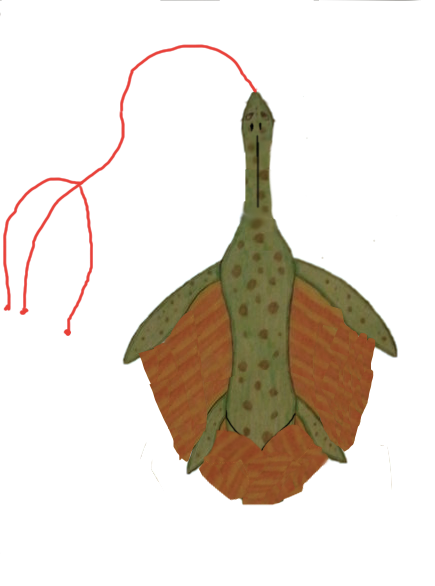
The best part, in my opinion, is that the scamandrith are lizard-people.
👍: 0 ⏩: 1

It's always great to be geometrically pious! Your mosaics are also amazing!
Yes, I noticed! Nice physiology too, especially the chromatophores!
I'm also interested in knowing, what kind of world you are building?

👍: 0 ⏩: 1
What kind of world, you ask? Well, that's... somewhat complicated. xD
My world, Aurhìm ("or-rum"), is, technically, a fantasy world (filled with wizards and dragons and the like). However, in my world-building, there are several "rules" that I make myself follow; this results in my world being very different from, say, something like the Dungeones and Dragons' "Forgotten Realms" setting. Some of these rules are:
1) The magic system has nothing to do with gods or spirits or anything like that. I made my magic system to work as just another set of natural laws and phenomena, like gravity or electromagnetism. My magic system is completely explainable in terms of specific set of physical and mathematical principles.
2) As a consequence of (1), I have concsiously constructed my world WITHOUT resorting to "supernatural" entities (gods, demons, spirits, etc.) as the reason for why things happened. In that sense, my approach is the opposite of what Tolkein did in Middle-Earth. Tolkien made a mythology (gods, cosmic struggles, etc.) and Middle-Earth is the place where that mythology happens. The tales that the inhabitants of Middle-Earth tell one another are the actual historical past of their world. In my world, however, the tales the inhabitants tell each other are just stories--it's how they interpret the world, not how the world actually is.
3) As a historian and a person with a great interest in the sciences, I develop my world realistically. Economics, racial conflict, changing ideologies, technological development, evolution, environmental factors--these are the forces that shape my world. (This also means I take my time in world-building. It's like doing a puzzle--you have to make sure that all the pieces fit together in just the right way.)
Let me give another comparison to illustrate my method.
I've seen some of your stuff, in fact--it's great. I particularly liked your star map. I've been slowly creating constellations for my world, too. However, I have to proceed carefully; if I want to put a figure up as a constellation, I need to know the culture that it comes from, what the significance of that image is to the cultures that acknowledge it, if there are any stories or traditions associated with it, and if other cultures might see a different figure instead.
Another example: fantasy worlds like having lists of emperors and kings. I don't have any--not yet, anyways--even though I've been working on Aurhìm for almost 13 years. The reason why I don't have any yet is that I'm (at present) more concerned with figuring out the "general specifics" of my world's history: what trends in societal and economic structure were happening, which population groups were migrating or expanding territory, which cultures were undergoing change and/or technological advancement, and so on. Once I know the outline of the history, I can them start filling in the details of individual rulers or historical events.
Of course, all this dedication to realism might make you think that my fantasy world is "boring". But it's not. As a mathematician, I constantly deal with situations where I have a certain number of rules and tools to use, and have to combine them to make something useful and interesting. I do the exact same thing with my world-building, often to surprising results. Some of my favorite examples:
• Before life evolved on Aurhìm, magic was so strong that things like water, rocks, and lightening were sentient and even created civilizations.
• There was a time (tens of millions of years ago) where there would be entire ecosystems based on UNDEAD animal life.
• There are trees that feed on lightning, bacteria that can make things explode, super-intelligent arthropods, and diseases (magical radiation exposure) that can make your hair turn blue, or make your sweat smell like candy.
• There are many popular fantasy stories that the inhabitants of my world read and write.
• Everyone can learn to use magic; it's just another skill, like riding a bike or playing a musical instrument. People study magic and experiment with it like real-world scientists (in fact, in Aurhìm, there is no distinction between researchers who study magic and researchers who study other, non-magical forces).
• I have plans to one day begin building the history of my world's future: spaceships powers by magical fusion reactors, computer-assisted spellcasting, dragons who want to become spaceship pilots and travel across the galaxy, etc.--like Star Trek, but with magic.
I just wish I was a faster, more productive writer--that way, I could tell some of the interesting side-stories. At the moment, however--and likely for many, many years to come--I am focused on writing my main series of books, some chapters of the first of which ("The Song of the Wind") can be found in my gallery.
👍: 0 ⏩: 1
Wonderful! Thank you for the intro! 
I began creating a semi-traditional medieval fantasy world, but realized quite soon that it wouldn't work. With the long history, it would be impossible for the world to be stuck in medieval technology, especially with magic. Thus their modern age is kind of a magical steampunk version of our Victorian era (in one particular empire with quite similar morality as well).
I'm also keen on creating a magical system with strict rules (based on elementary particles and probabilities). The magic is present only due to a local rift between the material universe and the "Spiritual world". The Spiritual world is actually sort of a transmultiversal computing-entity running countless simulations of various universes and their reincarnations. The spirits, which are means of the simulator to collect information, are tied to both local nature and magic.
In the material universe soon-to-die, several alien factions are competing of the solar system which houses great machinery capable of penetrating into the spiritual world (and which created the rift in the first place). The spiritual world would then work as an infinite source of power with which one could prevent the collapse of the material universe or create a new version to rule. The aliens introduce themselves as gods to people, and their ancient attempts to teach and recruit people live now as religions.
Why the spiritual administrator allows the penetration to happen? Because curiosity is its fundamental trait, and apparently it hasn't seen anything this significant for a while.
As a future astronomer, I should work more with the solar system and galactic details. The star map was practice and as you mentioned, one should indeed account for the cultural background.
I'm just too lazy in wrong areas... For example, with languages I should begin with protolanguages, but so far I've only created modern languages which should somehow be related. Now, I'm fighting against my stupid choices to construct previous versions of the languages.
👍: 0 ⏩: 0