HOME | DD
 Dracoarcus — Basilius Rhinoceros

#rhino #worldbuilding #basilius #elaturius #prehistoric #rhinoceros
Published: 2019-11-13 04:57:57 +0000 UTC; Views: 537; Favourites: 11; Downloads: 0
Redirect to original
Description
Basilius - [bass-SILL-ee-us] In story pronunciation.
Latin - [Basilius - King]
Species : Basilius lanatus E.
Temperament : Defensive
Diet : Herbivore
Size : 21 vm /17.25 ft Height ;; 26 vm /21.25 ft Length ;; 5443 kg/12,000 lbs Weight
Habitat : Grassland; Savannah; Tundra; Jungle habitat
Origin : Earth Origin; Mammal; Embrithopods
Description :
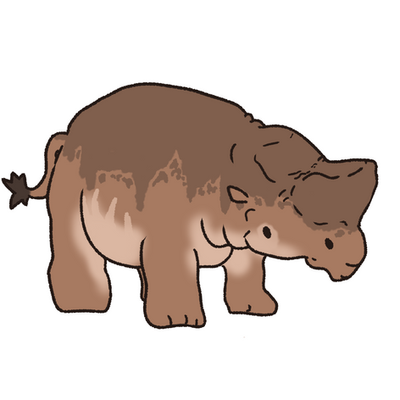
Basilius are massive, shaggy, twin horned, rhino-like animals.
Basilius look and act like rhinos in every respect, however, the order they belong to is an order of prehistoric elephants. They are closely related to arsinoitherium.
They have 2 very large horns that sit parallel on top of its head. Both females and males have these horns.
Basilius live and roam alone; females will raise their young to adulthood, the calves will usually stay with them a while after fully grown until they leave to roam on their own.
Females and males look identical, males being slightly larger and more aggressive.
They are mostly dark rich browns, they can be more tan or even silvers and whites if they live in the tundra.
Basilius hides are very thick and good for armour, their furs are warm and shaggy. Their meat is comparable to beef.
When domesticated they are easily cared for and handleable pack animals.
They can charge at a top speed of 50 kph or 31 mph.
In story pronunciation; the pronunciation has been changed for simplicity or preference
E. Elaturius ; A classification suffix the Sagax give to any species that has evolved to be genetically or physically distinct from their off-planet counterparts. This classification is not given to species that remain nearly identical to their counterparts even if they have lived on Elaturius for an extensive time.
Vm - Viertemeter (German - Vierte - Fourth) A quarter of a meter. This is a term I created to give a better equivalent to the imperial
foot.