HOME | DD
 echo1085 — Peppermint Strangler

#animal #domini #fauna #organism #peppermint #plant #polar #strangler #symbiotic #grazer #wallace2 #sidobosa
Published: 2021-02-18 22:31:48 +0000 UTC; Views: 688; Favourites: 8; Downloads: 3
Redirect to original
Description
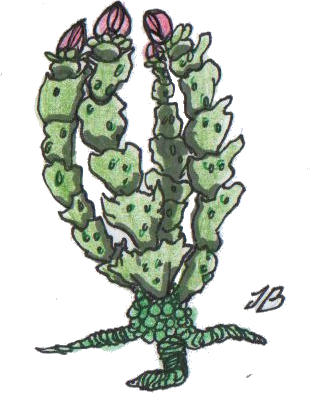
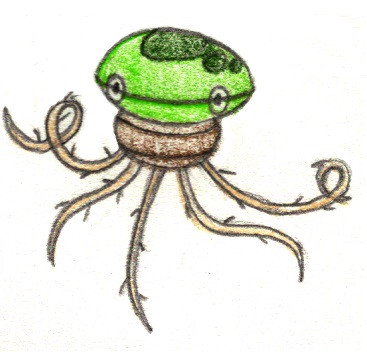
Peppermint Strangler {Nativitatus foliosuffocanti}Stranglers, another species of sidobosia, have trouble gaining all their nutrients {due to not being rooted in the soil} as well as energy from the sun. To compensate for this, these slow and largely sedentary organisms feed almost exclusively on domini polar grazers. At this time, the grazers will stretch out their legs and burst from the pod. Stranglers are capable of thermoregulation, emitting enough warmth for the young grazers while they slowly develop over the course of the winter. While the stranglers are a source of protection for the grazers, they are also it’s main predator. On occasion, the strangler will snag a helpless polar grazer with it’s tendrils and slowly lift it into it’s mouth, spreading it’s leaves as it does so. The grazer is then digested in the stomach chamber. Afterwards, the leftover skeletal system {fortified cartilage, not like bone but close enough} and the photosynthetic plate are forcefully ejected from the strangler’s mouth by a muscular contraction. The strangler only eats approximately one out of every three grazers out of the entire clutch. Grazers are by no means intelligent animals, spending most of their time ambling about and photosynthesizing, and laying their eggs by the warmth of the strangler is more by instinct than anything else. By snow melt, the strangler will have grown its reproductive organ, a brush of filaments with spores attached. The strong winds detach the filaments and carry them for miles around, where they settle on the ground and germinate. the strangler at first grows a mass of pinkish spines, resembling a sea urchin, before it develops its heat-producing leaves.