HOME | DD
 EvolutionsVoid — Bhekala

#amphibian #creature #frog #monster #toad #dragoneater
Published: 2023-10-15 19:40:20 +0000 UTC; Views: 6857; Favourites: 71; Downloads: 0
Redirect to original
Description
It is funny sometimes how people are so obsessed with dragons. Don't get me wrong, dragons are indeed incredible creatures that have wonderful abilities and both an intimidating and awe inspiring visage. It is just that often people envision dragons as the be all end all of animals. If you look at legend and folklore, they would say that dragons are the most powerful creatures in existence, sitting above all other living things. But if you stop and look at the whole thing for just a second, then you realize dragons are just another species in this world. They still need to eat, drink and breath just like everything else, doing all the normal things you wouldn't expect for a "god beast." I don't expect this to dampen anyone's view or admiration of dragons, and that certainly isn't my intention! I just want folks to remember that these are flesh and blood creatures, and not living embodiments of disaster or fury. Sure, they can be rather terrifying in their power and size, but remember what I said. Dragons are animals, just like us (and by "us" I mean my more fleshy readers. Dryads aren't animals, we're plants, but you get what I mean), so they must follow the same rules. They live in a natural world where there are things to eat and things that do the eating. Now if you think dragons are the most terrifying beasts around, then just wait til you learn about the things that devour them.
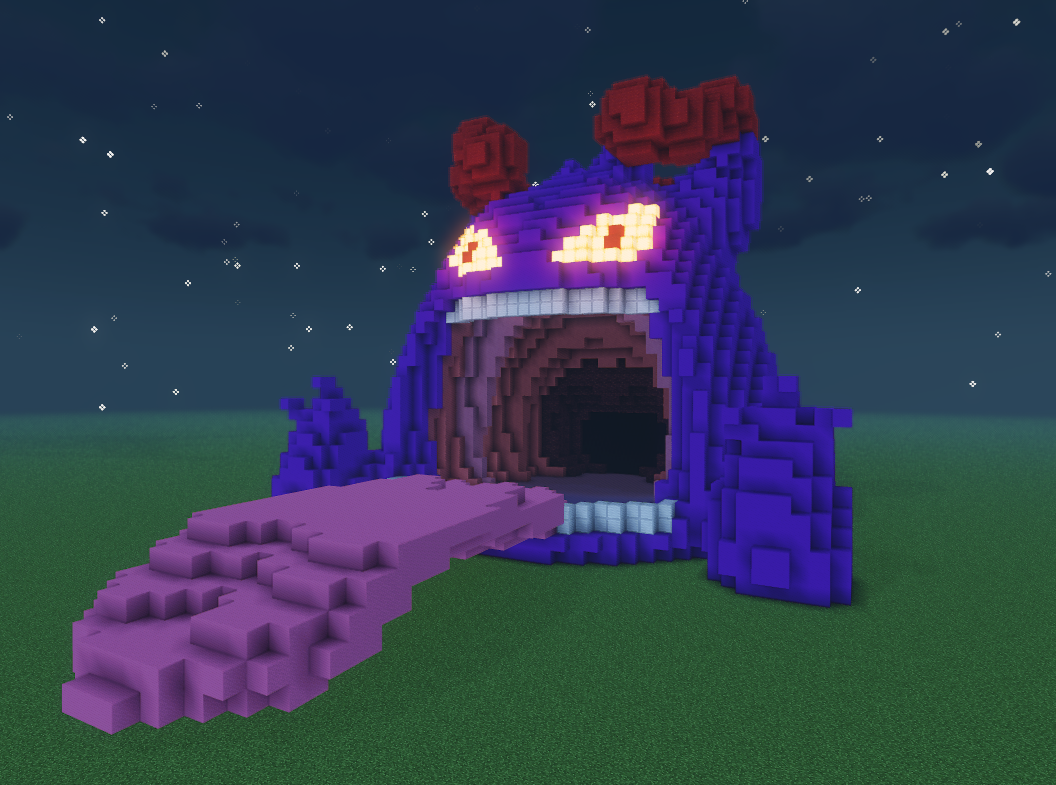
In the jungles out east, the thundering footsteps of a great beast causes all creatures to run or hide. The trees shiver and shake as its huge bulk shoves its way through the thick vegetation, making it sound like a landslide is breaking its way through the forest. If any outsider were in the area and heard this horrible din and felt the quaking earth, they would immediately assume it to be a dragon. If you yelled that out, all the locals would look at you with a knowing smile and laugh. "Oh you fool," they would joke, "that is no dragon. That is the sound of the Dragon Eater." It is a species that goes by a variety of names, Dragon Eater being one, Ogre Toad another and I have even heard them referred to as Daityas, but the most widely known and spoken name for this beast is "Bhekala." The Bhekala is a massive beast, with full grown adults sitting at over 20 feet tall. While there may be some taller lankier creatures out there, the Bhekala fills this large hide with an incredible bulk. Their bodies are bulging with muscle, gut and wart, giving them a staggering weight that causes the ground to shudder whenever they walk or sit down for a rest. While dragons are often called "monstrous lizards," the Bhekala is more of a "demonic toad." This species is an amphibian, being the largest toad found in the world. Their bodies have a tough leathery skin to them, but it still requires moisture. Thankfully, the jungle's humid atmosphere keeps them plenty damp, but that doesn't stop them from enjoying the occasional dip and soak in a nearby watering hole. Their skin is coated in thick hardened warts, which can ooze a noxious fluid if squeezed hard enough (good luck doing that without getting flattened). Upon their head, bony spikes erupt in a blazing crown-like arrangement, which draws your gaze to their terrifying visage. A wide tooth filled maw splits their face, able to swing open into a horrifying gape to devour its prey. It should be noted that these teeth are more for holding prey than cutting them up, as Bhekala like to swallow their victims whole. The other feature is the fact they have three eyes. The third eye in the middle of their head is often compared to the parietal eye of other amphibians and reptiles, and folks have wondered if this species had developed this eye or if everything else simply lost it. With three eyes, they have an incredible range of vision, especially since the third one sits in a way that it is partially pointed upward. Two eyes scan the land before it, while the third has an eye on the sky. For most creatures, this upward gaze would be for spotting aerial predators, but for the Bhekala, it is about spying food on the wing.
With such a size and bulk, they do need some hefty meals to get by. To help conserve energy, they move pretty slow when not on the hunt and do a great deal of resting and sleeping. But when it is time to down a feast, they can use their energy and bodies to do some incredible stuff. A lot of their power resides in their back legs, which are not only capable of carrying this great bulk around, but they can actually launch it. Despite their size, Bhekala can indeed jump, and to pretty impressive heights! If you were upon a mountain looking over the jungle and very lucky, you could see one of these great toads rocket up from the canopy, blasting through the vines and branches. Not long after, you would hear the earth shuddering "thud" of it landing back on the ground, the mighty tremble being felt for miles. So why does this huge toad do this? Why, to go after prey in the sky! Flying beasts like the dragons and Garuda fly just over the canopy of these jungles, often looking for food or nesting materials. The Bhekala's third eye scans the skies above for one of these fliers, and then they time their jump so that they collide with them in midair. "Challenging a dragon while in flight?!" You may ask bewildered, "but dragons are the kings of the sky! Are these toads mad?!" The answer is: no. In fact, their method of assault is pretty genius. You see, dragons, Garudas and other fliers have their bodies thoroughly designed for flight, with great care in take off, sustained flying and landing. For a jumper like the Bhekala, they are tuned to launching their bodies into the air, then dealing with the shock of crashing back down. For fliers though? They are designed for flying, not falling. When a Bhekala slams into the soaring dragon, it is like getting nailed by a boulder from a catapult. The initial impact can easily shatter bone and knock the wind right out of them. Some may lose consciousness, others may die on impact. But even if the hit isn't fatal, or the toad misses and instead snares them with a clawed hand, the violent ride back down can easily finish the job. I wonder what the dragons think during this violent attack, as they plummet to the earth with broken wings. King of the skies, scourge of kingdoms, and they are about to perish by simple gravity.
All it takes is for the target to be grabbed or even clipped, as disrupted flight means a hard landing. The dragon will plummet to the earth and crash through the branches, probably breaking a lot more things on the way down. Once they land in a busted heap, the great toad will lumber over and feed. If the flying dragon was grabbed by the leaping Bhekala, then they will find themselves being held between the falling toad and the ground, about to be pancaked by a life-ending body slam. If by some miracle, the flier falls to the earth and survives, the Bhekala will not hesitate to finish the job. Their massive bulk makes them unstoppable physical fighters, unleashing crushing blows and absorbing a whole lot of punishment without worry. Their typical tactic is to grab prey with their clawed hands and hang on tight, then follow it up by rolling atop prey and crushing them under their weight. Claw and tooth will fail to pierce their thick hide, and biting isn't a good idea unless you want a mouth full of vile wart fluid. Some dragons will call upon their most trusted weapon: their breath attack, and unleash a torrent of flame. Some may think this is enough to ward off this hungry toad, but sadly it won't do a thing. Gushing from their maw will be a bubbling foam, one that snuffs out flame on contact. They spew this all over their body to protect themselves from dragon fire, and even belch it at their foe to disrupt the flame streams. In some cases, a Bhekala may grab the head of a fire dragon and vomit this foam right down their throat, extinguishing their weapon and choking them to death at the same time. In most cases, when a Bhekala grounds its prey, the victor will be the mighty demon toad. Prey will be swallowed whole, or it will use its strength to break off limbs and chunks to make it easier to eat.
While they are infamous for eating dragons, Bhekala have more to their diet. Garudas are one, but they don't just eat fliers. Creatures of the earth must be wary of these toads as well, as they are up to eating anything they can get their hands on. With their huge size and slow speed, they are not pursuit predators. Rather, they prefer to rest near important places, like fruit trees and water bodies and simply wait for prey to pass by. If something large enough gets close, then that mouth of theirs unhinges and a meaty tongue comes flopping out. This tongue is a powerful muscle with hardened exterior. While other toads and frogs use sticky mucus to snare prey and drag them back into their maw, the Bhekala uses raw power. The tongue strikes like a hammer, slamming down to break bone and stun prey. Its prehensile pronged tip can then wrap around the broken victim and pull them back into its mouth. With this, the Bhekala can eat prey without having to lift a finger, simply letting its tongue do all the work. Lots of beasts can fall to this hunting method, with the Bhekala even eating Nagas. It should be clear by now that these toads are simply not to be trifled with, and that almost any large beast can wind up on its menu. The one saving grace we have is that human-sized prey is often seen to be not worth it, so they don't actively pursue people or raid villages. However, if one is sitting and waiting for food to come by, a passing human may be enough for them to give it a go, especially if they are really hungry. This is why it is important to be wary of your surroundings, and not blunder though the jungle blindly. You may ask "how does one not see a twenty foot toad?" But believe me, distracted travelers have ignored far bigger things.
When not on the hunt, Bhekala are rather slow and lazy beasts, preferring to simply sit and let time pass. They do enjoy a good bath in a nearby body of water, and have also been seen scratching themselves against large, rough barked trees. The only other time they get active is when the breeding season comes, as males fight for their right to mate. Their method of dueling is much like sumo, using more pushing and throwing of weight to determine who is the winner. Creatures of the jungle hate this season, because their mating battles tend to cause a lot of collateral damage. While they do pick special clearings to hold their battles, some combatants don't wait to get to the arena to start throwing punches, and a brawling pair of Bhekala can easily knock over trees and flatten smaller creatures. If this fighting wasn't bad enough, the territorial bellowing of the males can keep one up all night, as their loud calls can be heard for miles. When a male fends off the other bachelors long enough to claim a female, they will wind up laying hundreds of eggs in a nearby water body. Of all that are laid, very few even make it to the larval stage. The first dozens of tadpoles that hatch will eat the unborn and use their nutrients to grow. Over the course of months, they will grow bigger in size and fewer in number, til only a handful of large tadpoles remain from the original clutch. At this size, they are hungry predators of the pond, feeding on the fish and other inhabitants. Some of the larger ones may even attack animals that come to drink, using a sharp beak to grab on and drag them into the water. While these larvae may seem like tempting targets compared to their huge adult forms, they do have some powerful defenses. One is that they produce a potent toxin in their bodies, one they hold in their bumps and warts. It is similar to the fluid leaked from the adults, but when they grow up it loses its edge and becomes more a bitter, vile inconvenience. It is strongest when they are young, as it wards off predators. They are also capable of whipping up a cloud of bubbling foam, much like what the adults spit out. This noxious foam protects them from attackers, dampens their hide during dry times and can ward off the flame of dragons. So even if a dragon wishes to unleash their anger of these toads towards their young, the tadpoles can pretty much erase their precious flame. Also, while the adults are not the most caring or protective parents, they do tend to stick around the pond. Show up here and cause trouble, and you might get their attention and find a bone-crushing tongue headed right for your skull.
With such a size and infamous diet, it should be no surprise that the locals have a thing to say about the Bhekala. Funny enough, it swings between the good and the bad when it comes to these toads. Since they don't actively target human settlements, they aren't exactly feared. Sure, there is terror when one is lurching through the jungle and your caravan is in its path, but these are seen more as natural events or just pure bad luck. However, their diet can either be appreciated by some parties while offending others. To those who like dragons or Garuda, the Bhekala is a demon that devours guardians and represents the brutal nature of the jungle. There are plenty of statues and murals that show this amphibian as a great demon or beast of the underworld. To those who despise these species (mostly the dragons), the Bhekala is a guardian in itself, devouring the terrors of the sky. Their title as Dragon Eater has become so well known, that there was once an effort to spread the species to other places to deal with the "dragon threat." If the Bhekala could be established elsewhere, it would gobble up all those meany fiery dragons and everyone would be happy! How stupid! But people did try and the local dragons went "I don't think so!" The dragon communities gathered all the lightning drakes and bolt spitting dragons they could contact and went after these Bhekala nurseries. They fried every tadpole they could find and then burned these places to the ground. A tad extreme, but I understand their concern and am happy that such an idiotic effort to introduce giant toads to a foreign ecosystem was squashed. Like, can you imagine the damage?! Could you even fathom the amount of environmental destruction and species loss that would occur if such potent toads were unleashed upon an unwitting habitat?! I shudder to think of it! And for what?! Pest control?! You know what, I change my mind, burning everything down was totally a rational course of action.
It should be noted that due to their reputation, it was only inevitable that people try to hunt them or slay them for respect and trophies. After all, Bhekala hide is an incredible leather, their wart secretions valuable for potions and their meat is said to be fit for kings (after proper preparation and cleaning of course). So some folk get the idea that they are going to hunt a Dragon Eater and be known as the incredible slayer that killed the killer of dragons. Pretty much none of these idiots survived these attempts. Blades and arrows barely penetrate their thick hide and muscle, and their foam coating seems to dampen a lot of magic too. Shields and armor mean absolutely nothing compared to their bulk, and tales speak of locals coming across dead knights embedded in the ground, hit so hard that it pretty much buried them into a shallow grave. From the sounds of it, these attempts have stopped a long time ago, but you do hear stories from time to time of some rich idiot giving it a go. Ends pretty much the same way every time, so if you are married to a wealthy lord and can't stand him but like the money, try sweet talking them into Bhekala hunting. And make sure you are in that will!
Chlora Myron
Dryad Natural Historian
------------------------------------------------
If it is the spooky season then we need toads! And when you look at the equipment and ability toads and frogs have, then it seems natural to make one that eats dragons!
Related content




Comments: 8

👍: 0 ⏩: 1

👍: 1 ⏩: 0

👍: 0 ⏩: 1
👍: 0 ⏩: 1
👍: 0 ⏩: 0

👍: 0 ⏩: 0
👍: 0 ⏩: 1
👍: 1 ⏩: 0