HOME | DD
 EvolutionsVoid — Sea Basilisk

#basilisk #creature #monster #seamonster
Published: 2018-08-31 15:21:00 +0000 UTC; Views: 1844; Favourites: 32; Downloads: 0
Redirect to original
Description
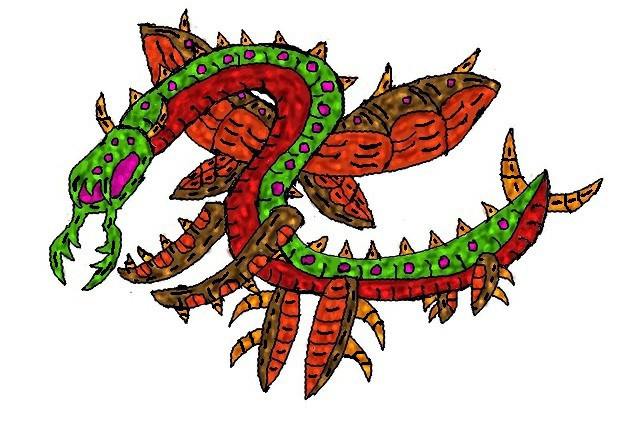
The Sea Basilisk is a unique member of the Basilisk family as it is the only one that has a fully aquatic lifestyle. As the name suggests, they are found in the surface zone of the ocean, sticking mainly to the shallows and sandy floors. Since they live underwater at all times, the Sea Basilisk has developed some traits to better survive this environment. The first thing they have to deal with is breathing, as the Basilisk family doesn't really have gills or the sort. While they are aquatic, Sea Basilisks cannot actually breathe water. They still have lungs that require regular old air, which means they need to go to the surface to get it. While you may think this would be tedious and inefficient, this species has found ways to make this work. The Sea Basilisk's lungs and body are specially designed to hold lots of air and use very little of it. I am not sure of all the details, but they are able to function for hours underwater without having to go up for air. A big thing that helps in this regard is their hunting style, which doesn't require a lot of movement or work. Even when swimming, they are able to cut down on wasted air and energy by using as little movement as possible. This brings us to the other thing they needed to adapt to: swimming. While we are familiar with the many legs that Basilisks use for crawling and slithering, the Sea Basilisk still possesses those but have added their own touch. Their small, simple legs are webbed, creating a large "fin" that they can undulate like a stingray. Their long tail has been flattened vertically to give them a paddle, which allows them to move quickly when needed. When they are scoping the ocean bottom out for hiding places or are just milling about, they will use the slow undulations of their legs to move. When evading predators or rushing to the surface for an emergency breath of air, their tail comes in to give them a burst of speed. The last thing they have developed are salt glands, which are located near their rear. Since they live in the ocean, they are exposed to high levels of salt when feeding. These glands help shed this excess salt into the water around them (Boy, I wish I had a set of these! Though I would prefer a different location...).With my talk of a slow method of hunting, some of you may already have guessed that the Sea Basilisk is an ambush predator. You would just need to look at a specimen to see how their body design is perfect for such a lifestyle. Save for their hump-like dorsal fins, they are quite flat horizontally, which is good for burrowing in the sand. Their hide is a wide pattern of browns and tans, which allow them to blend in with the ocean floor. Along their head, mouth and webbing are dozens of fleshy lobes, which are used to break up their silhouette and better blend in. A Sea Basilisk will search out a nice spot to hide and then bury themselves in the sand, leaving only their topmost layer exposed. There they shall remain motionless, which helps them hide and also helps conserve air and energy. At the tip of their snout are two plain tendrils, and on their chin is a clump of weedy looking ones. These strange appendages are movable, and the Sea Basilisk will have them sticking out of the sand so that they can use them as lures. When prey is nearby, they will flick these tendrils about, looking to create movement that will catch a hungry fish's eye. The goal is to bring them in close so that the Sea Basilisk can lunge forward, pull its mouth open wide and suck in the prey. The mouth of the Sea Basilisk has a fleshy lining that seals up the sides of their jaws, which helps with pulling in prey. When resting, their mouths will be locked closed and empty of water. When attacking, the sudden opening of their jaws will cause water to rush in, pulling prey in with it. Their mouths will snap shut and then comes dinner time! It should be no surprise that Sea Basilisks possess venomous fangs. Like the Swamp Basilisk, these are small and located on the roof of their mouths. These inject a paralytic venom, which helps with subduing larger prey. Despite what locals may say, the venom of the Sea Basilisk is not something you should really fear. Due to their webbed jaws and the location of the fangs, it is quite difficult for someone our size to get an appendage that far into their mouths to be injected. Most of the time, they will simply hide and hope that you don't notice them. If you accidentally step on one that is in the shallows, or you are one of those jerks that just can't leave things alone, they will most likely use their front teeth to give you a nip. The only time I have heard of people getting nailed by their venomous fangs is when they goad the Basilisk with an outstretched hand. If you do that, then yes, you will get injected with venom and yes, you deserve it.
Since Sea Basilisks are on the smaller side of the scale, they are vulnerable to predation. Their ambush style of hunting helps hide them from notice, but eventually they need to go up for air. During this ascension, they are obvious targets for large predators. A speedy escape with their tail can help, but in some cases, it may not be enough. During such emergencies, the Sea Basilisk will close their throat and open their mouths. Out will come their oral eye, which is a weapon that all Basilisks possess. For this species, the oral eye seems to cause disorientation and vertigo to those who meet their gaze. Those who have experienced its effects have claimed to have lost their sense of direction, and become confused about which way was up. In an underwater environment, those affected by its gaze will flail about as they try to reorient themselves, and most of the time it will be in the wrong direction. Even after the eye breaks contact, the victim will be dizzied for a few minutes. For some animals, this effect can be deadly, especially for those who need to surface for air. Even some divers have fallen victim, as they become disoriented and start swimming downwards as they run out of air. While the Sea Basilisk is not nearly as deadly or aggressive as the Grand Basilisk or Swamp Basilisk, it is advised that you leave them alone if you are ever diving in their area. If you want to see them, do it from a distance or just look at stuffed specimens at a museum.
While they are an underwater species, Sea Basilisk do come onto land. The only time they do this is during the breeding season. After finding mates and going about their routine, the females will head to the shore to lay their eggs. They will use their many legs to pull themselves across the ground, crawling up out of the surf and onto the sandy beach. With their claws, they will dig out a hole and lay a batch of eggs within. The mothers will cover it back up and then slither back into the sea. In time, the young will hatch and head to the ocean. At this stage, they are quite vulnerable, but they have some help. At birth, Sea Basilisk's have a sandy coloration to help them blend in with the ground. Their limbs are also well developed, which help them crawl quickly. The mothers also tend to target beaches that have very loose sand, which allows the young to burrow their way through it without exposing themselves to the air. When they reach the wet compacted sand, they will burst out and flee into the waves. Here they could still get picked off, but with a shorter distance to go, they have a better chance at escaping.
Also, apparently the Sea Basilisk is edible and certain cultures spear them and harvest their meat. It is said that their flesh tastes really good. A friend of mine insisted that I mention that in this entry. Not really sure why, as I don't have much to say on that. Haven't eaten one, though it does sound tempting. Anyways, I said it, so I hope she is happy with that!
Chlora Myron
Dryad Natural Historian
--------------------------------------------------------
Every monster family needs an underwater member, so here is the Sea Basilisk! This one is obviously based on the wobbegong.
Related content




Comments: 9

👍: 0 ⏩: 1

👍: 0 ⏩: 1
👍: 0 ⏩: 1
👍: 0 ⏩: 1
👍: 0 ⏩: 1
👍: 0 ⏩: 1
👍: 0 ⏩: 0

If there's an aquatic member of the basilisk family, and an Underworld variant... is there a flying one?
👍: 0 ⏩: 1