HOME | DD
 ZeroDevil — A Goal

Published: 2011-12-30 06:20:07 +0000 UTC; Views: 676; Favourites: 8; Downloads: 15
Redirect to original
Description
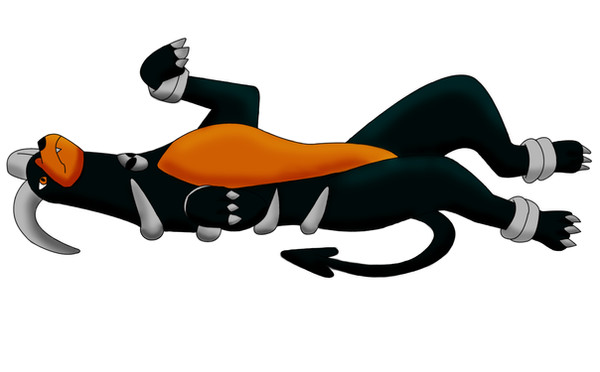
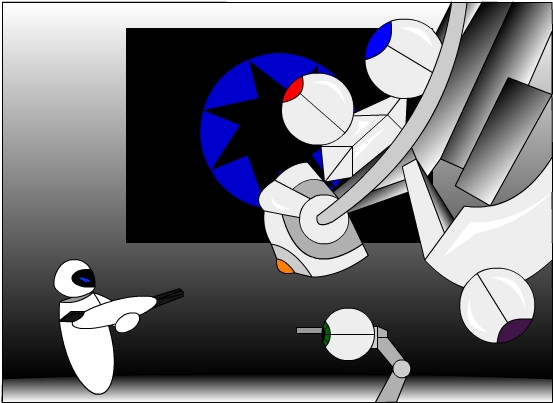
A sort of representation of what I aim to achieve; eternal life through a machine body and computer brain.No joke; I plan on making this happen (the transfer of consciousness from flesh into machine for the sake of eternal existence).
Related content










Comments: 26

I'm sure it's possible that humanity will become one with machines in the far future, achieving eternal life and other physical perfections. But here's what I ask of those who do achieve it when the time comes: Now what?
👍: 0 ⏩: 1

Now what?
That's a question that's easy to answer; keep advancing and living.
Just because everyone would be immortal doesn't mean that creative people would stop being creative.
👍: 0 ⏩: 1
I see. That was a bit of a stupid question for me to ask, eh?
👍: 0 ⏩: 1
No such thing as a stupid question; just a mis-timed one.
👍: 0 ⏩: 1
Thanks. Still, I should have known better...
Anyway, I always believed that one way or another, humanity will continue to evolve, but the way I see it, we will not only develop countless other forms than just robotic bodies, but that we are at the beginning stages of Self-Induced Evolution. I posted a small essay about the idea if you want more details on the matter.
To heat up this debate a little bit, I would like to point out that, though there are plenty of advantages to having a robot body, I can also see a menagery of disadvantages. Concider this: If you were to download your memory inside a robotic body, how do you know that you will actually become the robot, rather than the robot merely having a copy of your memories and personality? Will you become it, or will it become you? If it was to merely become you, then your goal of becoming a machine-man is, frankly, a waste of money, time, and effort, and you'll just die anyway. Also, if you managed to succeed in becoming the robot, what will your mental state be after hundreds or thousands of years? People have never, EVER, lived beyond 120, and often by their sixties their mental state wears down. Would life be worth living that long if you go crazy or essentially braindead after barely two centuries? And some transhumanists say that machine-men will be able to willingly alter everything from their appearance and size to their sex and internal features. That will be really awesome, yes, but what will that do to our identity? In the long run, will we no longer know who we are? Finally, if you have become a machine-man, what will stop the machine-man government officials from hacking into your mind and making you the person they want you to be, doing more damage to your identity? After a while, if everyone was to become a machine-man, global civilization will become eusocial like an ant hive, under the control of perhaps a single soulless individual with no hope of self-control. Humans will no longer be human. They would merely be machines.
👍: 0 ⏩: 1
Ah that annoying identity argument.
The process of becoming machine would be gradual; the data from the organic brain would be gradually moved into the machine one via a temporary hardwired connection.
The brain would be removed piece by piece from the skull. Whenever an organic section would be removed, a machine equivalent would be installed.
Your "self" is backed up many, many times inside your head. Your brain is packed with redundancy information in the event of damage/injury/disease/parasites. Evidence of this are people who have had major brain damage and yet still have all of their memories and functionality (that's just one example; there are others, but I'm trying to avoid a wall of text).
To sum it up, when the brain takes damage it does two things; it backs up data and makes new connections with neurons who have free storage space. The first thing the remaining organic neurons would find is the machine brain, which would have connection ports designed for neurons to grow into. The neurons would then share their information with the machine, which would record and share the information that makes up the patient's consciousness. It then takes over the functions of the organic section it replaced.
This is repeated until the entire brain is machine. The machine brain is then moved into a robotic body.
The issue of identity is circumvented completely in this procedure because the original mind is not destroyed; it is moved, not copied.
👍: 0 ⏩: 1
Not trying to annoy you, just getting a commonly-overlooked point across.
So, with your point here, it seems to me that if done correctly, machine-people can retain their idetity while gaining all the advantages of a transfer. But that won't change how evil some people can be, and if people are machines, their brains could be hacked like a computer and we could inevitably end up in an ultra-totalitarian technocracy.
That's part of the reason why I think people won't just take that one path. There will surely be people who wish to genetically alter themselves as well as stay natural or whatever. This will lead to the rise of several new breeds of humanoid. Personally, I think that the first enhanced people will arrive as early as 2030, and by the 31st century there will be several distinctly-different species. By 10,000 AD there'll be virtually zero remains of modern humanity. But I'm also sure the dominant species' will be mostly machine-based.
👍: 0 ⏩: 1
As goes the evil part, that can be reprogrammed.
As for the hacking; just because something is based in a computer doesn't mean that it can be hacked. Hacking requires some sort of connection to an internet, or at least some kind of interface with the code.
Only medical practitioners would have access to the kind of tech that it would take to reprogram criminal minds, and as goes the rest of the minds, there wouldn't be any kind of external access port, so the idea of getting "brain-hacked" wouldn't work.
👍: 0 ⏩: 1
So you're saying that the only real brain-hacking would be psychotherapy through reprogramming?
A good idea, definitely, but the people who do it would have to be precisely the right people, having agreed on a universal set of moral laws that have virtually nothing to do with cultural development, because one man's trash is another man's treasure, and vise-versa. I can see that tactic going wrong in so many ways.
Plus, if hacking involves internet connection, (1) WI-FI, and (2) wouldn't it be reasonable in a technologically-advanced civilization to allow direct-to-brain internet access and downloadability? Also, how about trading in your cellphones for long-distance telepathy on the go? With that internet access involved, a corrupt program may actually spread like a disease over the web, causing unexpected victims to suffer all sorts of mental disasters. It may not intentionally be done, but then again it may have. There would be little way of telling. Perhaps some anti-transhumanist people may have developed the virus to cause mayhem among the machine-people. It's possible...
👍: 0 ⏩: 1
Again, it's not possible if the brains aren't connected to any sort of network.
Yeah, it'd be possible to have a sort of link between these machine brains.
It doesn't mean I'd make one.
And even if you do have a link between them there is a way to virus-proof the operating system; have two separate machines in the same shell, so to speak; a master computer and a slave computer.
The slave computer is what actually accesses the network and sends out A/V data to the master computer, which is then displayed on the master computer's screen (or in this case, the android's vision; they'd see it through a window in their eyes, like a heads up display).
If the slave machine gets infected with a virus, it would go offline, but the master computer would be safe considering that there's no actual data transfer between the two other than A/V information, as well as the equivalent of mouse and keyboard movement.
Since the master computer (the actual brain) wouldn't be connected to the network it wouldn't be able to be infected. The connection device would, but the data wouldn't be directly transferred to the master computer. It'd be more or less like it is with your computer and your current brain; your computer may get infected with a virus, but the virus isn't going to transfer itself into your head. At the same time, you are accessing the information on the internet without actually being connected to it.
Very simple solution to a simple problem; just add a go-between machine between the brain and the internet that acts like a sort of floodgate.
👍: 0 ⏩: 1
So, essentially, you're saying that if a virus was to infect a machine-man's brain, it would only cause the inconvienience of not getting good access to the web, rather than causing severe mental damage? Well, that ain't too bad...but look at how some people panic today if the internet is down...do you think in the distant future that panic would lead to catastrophe, or will people be more mature about it and deal with it, or will it be no different from today's minor complaints?
I'm curious: do you feel these machine-people will be made up of machinery in the modern sense, or would they be made up of nanobots that behave like cells? Would they look like steryotypical robots, like something out of an H R Giger picture, something like the Silver Surfer, or exactly like modern humans or what? Also, concider this other major disadvantage: the more an organic body is used, the stronger it gets, while with a machine body, the more that is used, the more worn-out it gets. Do you think machine-men will have a way around this little catch?
And, no offense, you still haven't explained what to do about the age-problem. Though the artificial brain may not be as easily worn down as an organic brain, on a mental level, how would people be affected over a period of hundreds or thousands of years?
👍: 0 ⏩: 1
Don't get me wrong; machines would need replacement parts every now and then, but the system itself would be very easy to maintain.
As goes nanobots; I don't trust them. It's less because I fear catastrophe, but just because I doubt their reliability. Auto-repair systems don't tend to work well.
And yes, the virus would be a minor annoyance, nothing more. On top of that here's something to consider; the slave machine would have a sort of auto-reset function; a built-in hard drive wipe with a reinstall feature to rebuild its OS should it be corrupted or ruined by a virus.
In short:
1: infection detect/manual override
2: slave machine disk wipe
3: slave machine OS reinstall/update
👍: 0 ⏩: 1
So you think it would be better if machine-men just stuck with traditional machinery rather than nanotech? In the sense that it might be safer due to the fact that it is technology that has proven itself worthy, I'd agree, but concider how utterly complex the robot body would have to be! If the machine-man was to live as active a life as modern humans are capable of, let alone an improved one with more protection from various dangers, the body would have to have all of its components crammed into a human-sized area and function smoothly as well, and it would have to be shelled in an outer layer that is both sensitive and durable, and preferably watertight and flexible, at least at the joints. It would also have to keep relaying thousands of signals simultaneously throughout the body with virtually no loading time, and it would have to have a superefficient form of power and easily recharchable. Even with future miniaturization of technological components, a robotic human-like body would need a LOT of moving parts and components, making maintenance much more difficult than you're anticipating, especially since there would be no real healing process.
If nanobots were involved, then not only would there be a natural healing process, but an entire nanobot body could be just as efficient as the human body with the added atvantages of transhumanism. Not to mention, it would allow for reproduction. If everyone became a machine-man, then sure, they could probably still have the sex they want, thanks to specially-built components and sensors, but they wouldn't be able to reproduce. If the population wants to expand after a great loss of individuals, say, after a war, they would only be able to build new machine-men in factories, who would not have any original human memories within them. In the long run, humans would become extinct both physically and mentally, with mere robots in their place. But if nanobots were involved, we could continue to reproduce new individuals with human intelligence rather than mere artificial intelligence, because the brain would still be identical to a human brain. Yes, either way, the human minds would eventually disappear, but the remainders would still have that essence that makes us human.
Think about it this way: How would you feel if it turned out that, as awesome a machine-man you may be, you have no soul, that you are merely a simulation of what a soul should be? You are capable of all the things humans are capable of, with several things that humans were never capable of as well, but none of it is real. Are those really emotions you are feeling? Are you truly capable of thinking outside the box? Are you alive?
👍: 0 ⏩: 1
And nanobots would suddenly make all of this easier?
Once you start getting into systems that are more or less artificial cells, you run into the same problems that cells have; overcomplexity, cancer, aging/code damage, possibilities of infection, incorrect growth, malformed internal components, vestigial organs, mutation, evolution, and every other fault that organic systems have.
Increasing the number of machines is not going to aid anything. All it's going to do is introduce more problems. It'd be better to have a more simple machine that's easier to maintain. Waterproofing a machine and having it run many instances of information at once aren't hard things to do if you know what you're doing (I'm no stranger to waterproofing machinery, and as goes the multi-information signaling, I think my idea for a photo-electric CPU would be more than sufficient to handle it).
Also: reproduction? Seriously?
Two words: UH, NO.
What you're describing is to more or less just replacing protein with metal. In short, you're telling me that you want to keep things EXACTLY HOW THEY ARE NOW, except with metal being the medium of life instead of protein.
You'd still run into all the problems of an organic system with the setup that you're describing.
Now, I don't doubt that nanobots could be improved/be useful for something, but I wouldn't want to use them for something like this until it can be guaranteed that the information that they use to self-assemble won't degrade over time like it does in organic cells.
And another thing; why in the world would producing more androids in a factory be bad? So what if they were never organic? I'd call that a plus.
👍: 0 ⏩: 1
Well, I can see there's no winning THIS debate...So, to avoid a flame war, I'm just going to suggest that we should agree to disagree...(sigh)...
I'm just saying that it may be possible that humans will one day split up into several species, at least one of which will be machine-based, and personally I think nanotech would be a better way to go than conventional machinery. If that's something you wish to accomplish in your lifetime, and if you succeed, then more power to you. I'm just afraid that so many people will try it and so many of them will die trying because something went wrong.
Peace.
👍: 0 ⏩: 0

if you manage to get your mind transferred into a machine, would that mean that, should the process become economical, that a whole new business revolving on physical modifications arise?
👍: 0 ⏩: 1
What's wrong with that?
Personally I wouldn't mind such a thing as long as the big corporations stayed away from it.
👍: 0 ⏩: 1
Nothing wrong with that. After all, every industry for modern technology didn't exist at some point.
I think that the big corporations might try their hands at the modification business, but wouldn't do as well as the specialized places. Within the specialized places, some could grow to the levels of big corporations.
What kinds of modifications would you get? For all intents and purposes, the body you would have is as drawn with no special features.
👍: 0 ⏩: 1
I would probably build multiple ones for whatever mood I'm in.
👍: 0 ⏩: 0

Wow, deep. I'd do that if it didn't include losing the good things about being "human". By the by, love the drawing, but what sort of setting is this? Plz, I have no brain, just program.
👍: 0 ⏩: 1
First off, I can't really see many (if any at all) good things about being a human (heck I even have a lot of disdain for the word "human" and don't even consider myself one; I actually take being called a human as an insult).
But just because a process can be done with an organic system doesn't mean that you cannot do it with a machine one; in short, if a system exists, it can be replicated in another medium.
👍: 0 ⏩: 1
I mean things like empathy, compassion, all the things that make a soul...good. You become nothing but steel, easy to manipulate. The reason I prefer cyber-nation is because you keep the things that make you think twice before, say, blowing up the world. As a robot, what you do is dictated by your program. You become nothing more than a slave to the clever man. Even androids face that very same problem. Think clearly before choosing to do something like that. It's not just your humanity your giving up; it's your freedom.
👍: 0 ⏩: 1
Organic beings have programming too; they're called instincts, emotions, and DNA. Do you ever stop to ask yourself WHY you feel? WHY your mind gives into emotion over logic? WHY these things persist even when you want them to go away?
It's programming.
And just because you become a machine doesn't mean that these things cannot be replicated.
When you move a mind into machinery you move that mind's thought patterns too. You wouldn't be losing anything in the transmission.
👍: 0 ⏩: 1
True, but such things are impossible to imitate. AI are a breakthrough, so you may get your wish, but have caution. There are many people that would love to trick you so that you can be their super weapon. If you actually succeed, you have a faithful friend and follower. If need be, I will fight for you.
👍: 0 ⏩: 1
...
Again, things like that are NOT impossible to imitate. DNA is just another kind of code (a very bad one at that). Organic systems are just another form of computer and their data storage methods can even be compared to those of an electrical computer without being too far off.
In short, there isn't really anything that any organic system has that cannot be replicated by a machine or by using a virtual cyberspace model. The only reason people say that it can't be done is because no one has successfully brought all the components together yet.
👍: 0 ⏩: 1
True. I meant to say near impossible. However, the program has little nuances that are still being discovered. I have a feeling that there will be a breakthrough in our lifetime. Even if so or if not, I shall support you best as I can. I respect your choice, and I shall remember this for a long time.
👍: 0 ⏩: 0