HOME | DD
 TurnerMohan — Vampires

#vampires #lordoftherings #sauron #silmarillion #tolkiensilmarillion
Published: 2016-04-19 13:38:13 +0000 UTC; Views: 17675; Favourites: 265; Downloads: 105
Redirect to original
Description
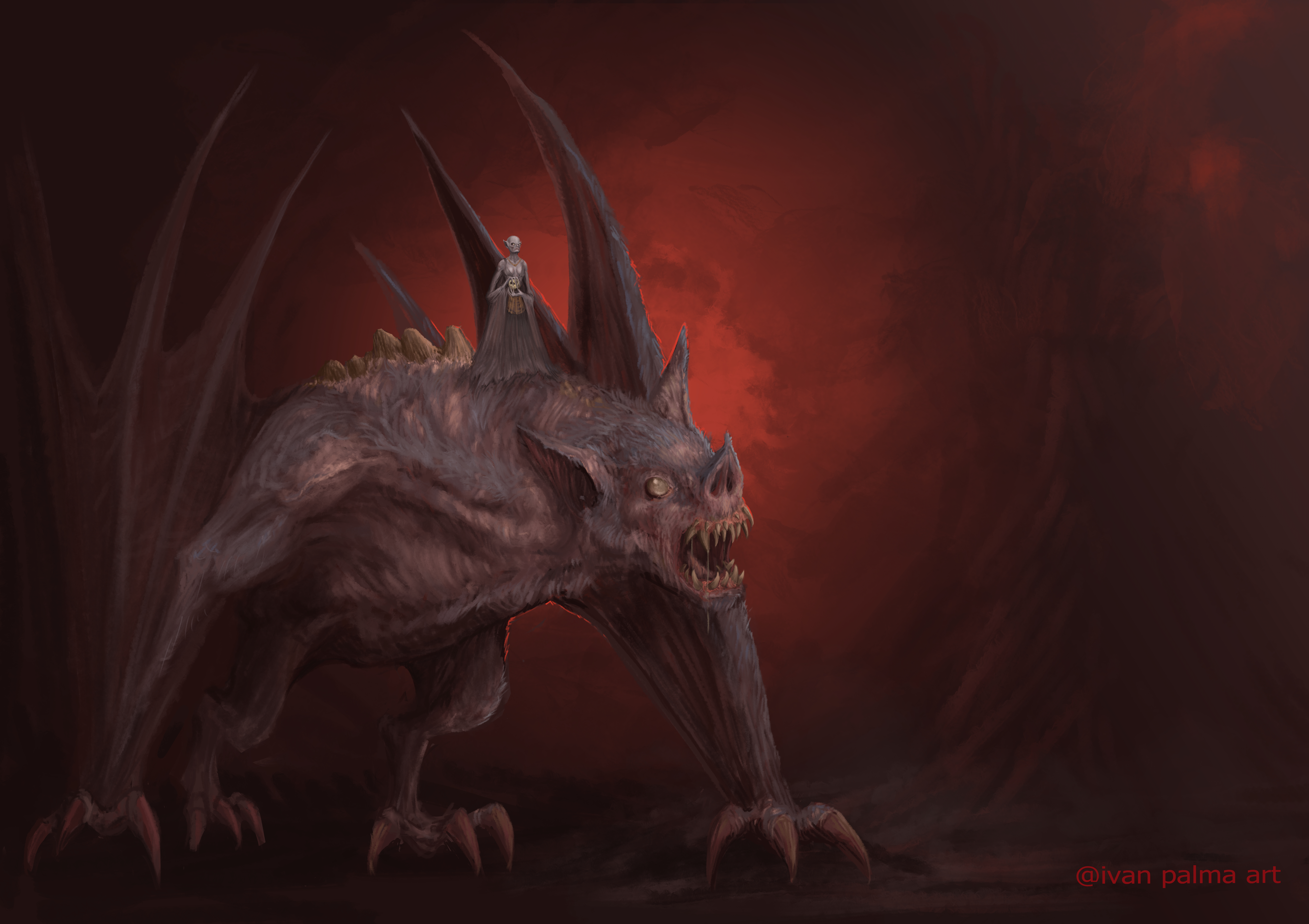
As with my recent Numenorean Armours, this one was basically me just falling back on old concept material for photoshop practice, but I'd always wanted to revisit the vampires of middle-earth; as folklore monsters go, vampires (largely owing to their many iterations in modern pop-culture) typically seem baroque and elegant, almost to the point where it's a little strange to see them making an appearance in Tolkien's decidedly archaic world of goblins, trolls, dwarves, elves, dragons, wargs, and giant spiders, but it's often forgotten that vampires haunted the imagination of ancient man in many confused, meandering traditions - some of which painted them as originally living humans that had been attacked by/succumbed to evil, some as essentially lesser demons - long before those mannered, dapper, always-formerly-human Draculas and LeStats and Edward Cullens monopolized the genre. Tolkien's vampires, as is to be expected, are of the archaic variety; inhuman, malevolent spirits, servants of Satan, taken form on the earthly plane to afflict and prey on the children of God. It's a picture of "vampires" not as a specific, taxonomic type of monster following all sorts of pre-set genre dictates, but as yet another demon of the Pit so to speak, something you might expect to see flying around the satanic bacchanal atop Bald Mountain in Disney's 'Fantasia' (needless to say, if I ever get around to doing a take on Morgoth's throne room, it will be heavily indebted to that amazing little cartoon sequence).From what little information we have to go on (essentially a few throw-away lines about Thuringwethil, the only named vampire in Tolkien's world) they are purely bestial, bat-like monsters, rather than being corrupted men or elves, and it's easy to imagine them in this form perched amid the upper parapets of Tol-in-Gaurhoth like living gargoyles, but I always wondered (as I have often wondered about the "werewolves" of the first age, the other major group of the lesser maiar in service to Morgoth) if Tolkien's vampires could change shape, appear human (or elvish/darwvish/ect) at need. The betrayal of their secret councils and the possibility of the servants of the Enemy taking on the appearance of friends and kin is a constant fear in the kingdoms of first-age Beleriand - and indeed it happens many times - and it seems reasonable to assume that that is largely the domain of those lesser fallen angels, Morgoth's middle-wrung servants, higher up the chain, more powerful and more wicked than his hordes of orcs or lumbering trolls, but far below the mighty spirits that inhabit Glaurung, the balrogs, or Ungoliante; an important caste within the forces of evil - encompassing the vampires, werewolves, boldogs and likely other, unnamed hellspawn - and one which I imagine, based on the text, to be largely controlled and administrated by Sauron, the so named 'deceiver' and ensnarer of the free people, the mighty sorcerer and lieutenant to Morgoth, a powerful maiar spirit himself who can freely change shape and is remarked to do so many times.
It was largely speculating on their possible function as shape-shifters that inspired the decision to give the vampires' faces this somewhat jarring bone-white coloration and almost human appearance; it's easy to imagine Thuringwethil (whose rather elegant-sounding name means "woman of the secret shadow") as being able to adopt a more human and appealing version of the monstrous visage we see here; full red lips, pale skin, black hair, perky breasts, she'd be quite the looker showing up at some feast among Beor or Hador's people. Throw some mead in the mix and you probably get all kinds of valuable information.
Part of the Weekly Tolkien Sketchblog
Related content




Comments: 17

👍: 0 ⏩: 0


Incredible work! Your versions of Tolkien’s vampires are beautiful and terrifying: exactly as vampires should be. It’s a refreshing change from the more humanoid depictions I’ve seen.
So you’re also a fan of “Night on Bald Mountain”.
👍: 1 ⏩: 0


Oh, cool! This is truly beautiful concept art; besides really loving Tolkien's unique, original concept of vampires here, I really can see this depiction you've created as being put by Peter Jackson in a Middle-Earth live-action film. Also, the idea that there gargoyle-like chiropteran Tolkien-ish monsters could disguise their bestial visages to hide amongst mortals is likewise truly fitting and chilling!
👍: 1 ⏩: 0



Oddly one gets the idea that Sauron himself is far better at the softly-softly methods of interrogation, while the Vampiric Messenger prefers to adopt a Human seeming only to make the revelation of her truly inhuman nature all the more petrifying!
Please accept my compliments upon producing a strikingly-petrifying image of a Vampire; I have to admit that it makes me wonder what your take on some of the classic Gothic creatures like Frankenstein's Monster and The Prince of Darkness himself would look like ...
👍: 1 ⏩: 0

You know, looking at these renditions, I think they'd make for a fairly close reference to female orcs. Feminine, but still in a more regressed and beastly manner.
👍: 0 ⏩: 0

If that isn't off-putting at the very least, I don't know what is. Another excellent piece!
👍: 0 ⏩: 0

Ho, that's an eerie one. Great! Your depiction of Vampires finally looks like something one can be frightened by (and certainly doesn't want to meet at night). Especially that scraggy, almost skeleton-like look makes them appear like something evil of very nature. It even reminds me a bit of Gollum who was described as rather ... skinny as well but still with a surprisingly ferocious strength in his limbs which the very evil in him gave to him. Thus I'd pretty much agree on the thought of Vampires and their associates being of the caste of the Maiar granted with some sort of magic power making them stronger that they appeared to be.
Well, talking of "appear". I honestly often wondered why Tolkien brought up the only named Vampire as a female while most of the Ardas's villains are not so (except Ungoliante and her breed, which is by a biological point of view quite comprehensible). Kind of strange, there are six good male Valar and six good female and concerning the Maiar that ratio fairly continues, but female antagonists happen only as the named fell spirits in spider shape and Queen Beruthiel perhaps. I doubt that Tolkien had those Vampire ladies of Bram Stoker's "Dracula" in his mind when creating her; maybe it's just for Luthien needed a fitting disguise. And of course - as you mentioned - for luring and tricking the mortals an appeling outfit is most useful.
Great work, keep it up!
👍: 1 ⏩: 1

"fell strength" is the term tolkien likely would have employed i think, and yes, I agree; as maiar spirits the vampires and werewolves of tol in gaurhoth would be possessed of strength far surpassing what their forms would suggest (that part of "nosferatu" where the skeletal count orlock is lightly skipping down the street with a seven foot long coffin full of dirt under his arm always struck me as compellingly freaky and vampiric)
the gender roles of the forces of evil in tolkien (and really of the ainur in general, for whom such a thing seems a personality prefference rather than a physical form they were born in and are obligated to stay in) is a subject of great interest to me, and one that i think is inadequately explored by many: Morgoth and especially his balrogs seem these demonic beings of almost purely "masculine" energy (to use the classic, archetypal estimations of masculine and feminine), forward-thrust, forceful, dominating, whereas ungoliante and her brood are a much more typically "feminine" type of evil; bloated, lusting, carnal, web-spinners (the thought has often occurred to me that Ursula from 'the little mermaid' is a near-perfect tolkienian spider anthropomorphized) Sauron and his ilk, the vampires, werewolves, fell spirits, i tend to see as meeting somewhere in the middle, the decievers and beguilers, androgynies and gender-benders of morgoth's servants. this applies very much to sauron himself i think, a fluid, shapeshifting monster, usually more cerebral than physical in his evil, and willing to play the submissive role of councilor and exert influence through power of suggestion over dumber, more testosterone-laden partners (this is very much how i see his relationship with ar-pharazon and to some extent his relationship with morgoth even) insofar as the lay of leithian is this typical germanic fairy-romance tale (or rather THE typical germanic fairy-romance, elements of which will go on to find there way into the stories of rapunzel and sleeping beauty) I've always thought that sauron essentially functions as the archetypal "evil queen" or sorceress, pehaps thuringwethil was the phantom made to look like gorlim's wife, or perhaps it was sauron himself.
no i doubt as well that tolkien would have taken much interest in dracula; he could be a real stick in the mud about what he considered the appropriate use of ancient myths/creatures/archetypes, and i'd guess he likely recieved the count with his manners and erotic undercurrents with some of the same disdain that today's ancient-monster-afficionado would regard the twlilght vamps. I drew some inspiration for thuringwethil from lilitu, the ancient mesopotamian blood-drinking she-demon (an early "vampire" if you will, and one of the inhuman, hellspawn variety) tolkien as always remains devoid of eroticism, even when treating the profane forces of evil (for whom you'd think that bestial, pit-of-hell style eroticism would be a natural fit) but I'm drawn toward an eroticized picture of thuringwethil mainly because it's a form beautiful, pure, chaste luthien assumes for what turns out to be a pretty erotically charged encounter with the devil (or what would have been an erotically charged encounter in anyone other than tolkien's hands) and in a sense i like the idea of her functioning as this foil image of luthien, both are female maiar spirits, and it's almost as if it wouldnt be to hard for luthien to turn into something like that if successfully seduced by morgoth. together the three named women of the lay, luthien, melian and thuringwethil form an almost perfect virgin/mother/whore triangle (now that's something i'd bet money tolkien wasnt shooting for)
👍: 1 ⏩: 0

Woah, very awesome design. I really like how they indeed remind of some living gargoyles. Stil I have some doubts on your information on actual vampires. That aristoratic elegant vampire originated from XIX century literature. Original vampires from folklore (Slavic folkolore in particular) were more like typical "zombies", undead bodies of villagers that rose from graves and hunted for people, farm animals etc. There was even a list of traits that would predestine individual to become vampire in death (and among these were for example violent death, congenital anomalies, having big teeth but also such simple things as red hair!) Theat folkloristic image was quite persistent, I read somewhere of a case from early XX century where individual was pronounced dead due to coma and later "came back to life" during his funeral and had his heart impaled by his own frightened family.
👍: 1 ⏩: 1
I'm aware that dracula was not the first aristocratic vampire in literature (there was some english one before him, i can never remember his name) and I know that by the 19th century, when the word and concept of "vampires" started to emigrate from the balkans into western european popular imagination, they had been long since canonized as at one time living people, rather than inhuman demonic entities, however, like most mythological entities, vampires, or creatures closely related to them in concept, go back thousands of years, and especially among the older lot you get a lot of decidedly inhuman, demonic beings (Lilitu, the ancient mesopotamian/hebrew blood-drinking she-demon - on whom many of my ideas concerning thuringwethil are based - comes to mind) as a man who felt free to jump over several centuries worth of tradition in order to restore to the elves the power and majesty they had possesed in ancient times, I feel fairly confident that tolkien would have likely taken a similar route in his portrayal of vampires, looking at the general outlines (servants of satan that drink blood) rather than getting bogged down in the specifics, or getting to worried about proper classifications and sub-classifications. this is what has always bugged me about those "it's not a dragon, it's a wyvern" people, i think there's a tendency in the modern, scientifically minded imagination to want to break things down into groups, whereas so often in ancient mythology beings will be freely referred to by a wide range of names and, depending upon the creature, can kind of weave in and out of them, even dracula, while he comes from later on, is both a vampire and a werewolf.
in general i think a good way to look at middle-earth (particularly regarding the evolution of the conflict between good vs evil) is that it is a world becoming ever more mundane and human as the ages wear on; that the presence of ultimate, theological evil, mostly seen in visions and whispered in shadows by the time of LOTR, was much more open and visible in the days of Uttumno and Angband. as we see in sauron's rise to power in the second and third ages, the roles that would have been filled by fallen angels (like himself) in morgoth's day are largely taken over by fallen men; the nazgul, the mouth of sauron, gothmog, the un-named messenger to dain, and actually all these figures are rather vampiric in that later, more human way, pearticularly the nazgul, who in (essentially) selling their souls to satan live forever but as these haunting wraiths that fill living men with terror, very vampiric.
i suppose all of that is a very long way of saying, yes, there were "vampires" of the non human variety in mythology, and, like flightless dragons, they're actually the older variety, and i tend to think that's what tolkien was shooting for
👍: 0 ⏩: 2
Master Mohan, for the record I believe that the predecessors to Dracula to whom you allude are Varney the Vampire (from the 19th Century equivalent of pulp fiction) and Lord Ruthven (from Polidori's THE VAMPYRE and allegedly inspired by Lord Byron); one might also evoke Carmilla from Sheridan Le Fanau's eponymous novel, although she is less obviously Count Dracula's literary antecedent by virtue of being somewhat less blatantly-evil to behold.
... No, I haven't actually read those stories, I just have a peculiarly-retentive memory for Trivia.
Bu then so does Professor Van Helsing (and when it comes to picking an inspiration, The Good Professor is DEFINITELY my Personal Pick and to the Dawn with vampires of any hue!).
👍: 0 ⏩: 0
I don't think that the >vampire< originated from balkans exclusively, I think this creature was present in myths of all slavic nations. Good that you mentioned the Nazgul, in Polish the word wraith (upiór, upir) and vampire (wampir) share common origin and originally these two were considered same type, until, I think, more modern fantasy split them into categories ( It's a bit similar issue to the dragon vs wyvern case you've brought up)
I am also aware that archetype of a bloodsucker is very widespread and what I meant about origins of "vampire" was more related to roots of the word than archetype itself. Almost every culture had it's own "vampire" though. Personally I find the Penanggalan most weird of all those vampire myth's have you ever heard of it? It's just so weird!
I think that yur idea with Thuringwethil/Lilittu is very well thought, as Lilith/Lilitu has been often potrayed with wings, a flying creature of darkness, ideal for Morgoth's messenger. I also think that your concept of middle earth evil gradually getting more and more mundane. Perhaps this is could be due to Morgoth's essence originally put in his creations geting more and more diluted overtime?
👍: 1 ⏩: 1
that's interesting about the linguistic overlap between "vampire" and "wraith," as i tend to see them as related concepts, and yeah you could say that the nazgul are a kind of "nosferatu" living eternally outside of the grace of god, this same is true for gollum, who, as is remarked of the ring bearers, doesnt die, but neither is he actually given more life, he's just dragged out through the centuries becoming ever more wretched (gandalf even recounts, early in the FOTR, of the reports of gollum among the woodmen as "a ghost that drank blood" again, very vampiric)
I've never heard of the Penanggalan before, i'll have to check it out.
i'm glad you find my musings regarding the relating of thuringwethil and tolkien's vampires to lilithu and other such ancient middle-eastern demons appropriate, and yes i think dilution is a major force in middle-earth. the way i see it all of middle-earth (the good as well as evil) becomes diminished with time; the first wars between good and evil were wars between angels and demons, and they were fought with nothing less than the building blocks of the Earth itself (or even with pure metaphysics, as in the Ainulindalie). As time goes on in middle-earth (as in our world according to Christianity) the conflict between good and evil continues - it's built into the world - but the children of illuvatar inherit the conflict, and what were once wars between angels and demons turn into wars between elves and orcs, between good and evil men, and the lines become muddied; the Rohirrim for example are, as a culture, only more "good" in the absolute, cosmic, theological sense than the men of Harad or Dunland by mere degrees, and by the end of the third age, only in rare moments like the battle between Gandalf and the Balrog do we get a glimpse of that conflict uncloaked and re-assuming it's ancient grander and clarity, but i do think there's alot of inheritence, both of the older, purer good, and the older purer evil in middle earth by the late third age. Aragorn for example is a mortal man but he is of the line of lutien and melian and therefore retains some inheritence, however diluted, of the angelic ainur. conversely i expect this probably also happens with the forces of evil (and is possibly far more common on the dark side) the wargs of the third age may be long descendants of the brood of drauglin, mixed with regular wolves but retaining some small part of that evil spirit, or a great orc like azog may be (though it would be almost certainly unknown to him) the long descendant of the boldogs of the first age. those few characters from the first age who are still around by the third age, galadriel, celeborn, sauron, the balrog, are pretty easy to spot, and pretty mighty, because they're undiluted, they came from a mightier time.
👍: 0 ⏩: 1
The two are definately connected. The divisions of "undead" based on their external looks are somewhat artificial and introduced by modern fantasy, at least to my knowledge. Orignally all of them had common base of being souls that did not find peace after death; The individual characteristics of particular undead would come from circumstances of their death; For example drowned ead would become water spirits etc.:
The Nazgul can definately be seen as analogous to vampires; Especially the scene when Frodo gets stabbed by Witch King and begins to transform into a lesser wraith himself bears a clear similarity to Dracula's bite. The fact that they could not enter Rivendell was a bit similar to a vampire being unable to set foot on the sanctified ground as well.
How did you like the Penanggalan? It's so surprising to hear it's from folklore. Seems much more like something from an 80's B class horror movie at first.
Also yes, this ongoing "decadence" is very clearly seen in the forces of evil. Another good examples are spiders of mirkwood, which are nothing compared to their fearsome ancestors, as well as "cold drages" emerging in later ages in which case, I believe, loss of fire breathing was due to slow process of reverting back into some kind of fireless reptilian ancestor. Ultimate example is the fact that drastically weakened Sauron is still the most powerful being in the new Middle Earth, while in the old days, at his full power he was a mere sidekick. (and has been owerpowered by a dog.
👍: 0 ⏩: 0